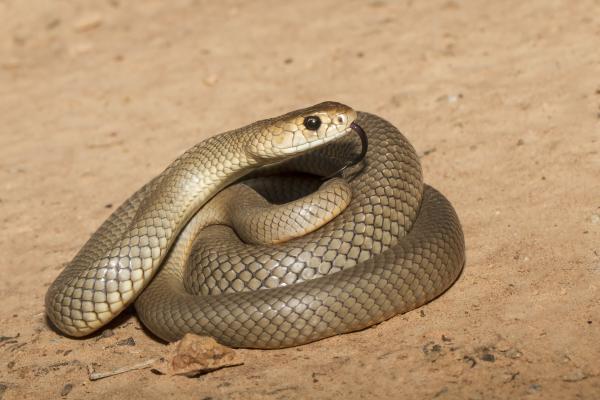
Proteomic comparisons of venoms of long-term captive and recently wild-caught Eastern brown snakes (Pseudonaja textilis) indicate venom does not change due to captivity- McCleary et al. 2016
- Venom composition is variable across multiple taxonomic levels, including populations
- Antivenoms produced by snakes from a certain region may prove to be ineffective against bites in another region, because of the high variation in venom composition, it even differs between geographic region and prey.
- Venom can also change within an individual, with venom composition changing b/t left and right glands, frequency of extraction, as well as differ based on the preservation technique.
- Studies have shown that when comparing Bothorps jararaca venom of wild caught and 3 year captive animals, the wild caught had shown higher hemmorahagic activity with lower murine LD50 values for long term captive adult females.
- Snakes of the same species but vary in geographic region can show differences in procoagulant activities and anti-plasmin activities. This means that geographic location has an influence over the properties of the venom, heightening some aspects ever so slightly, and even decreasing in others. These are created by what seems to be random chance, but what if we were to harness it.
- Aim: To investigate the effects of captivity on eastern brown snakes, 6 animals were captive for 6 to 10 years, while 6 were recently caught. N= 12. THE CAPTIVE ANIMALS WERE GIVEN 6 MONTHS OF NO VENOM EXTRACTION, could this have been enough time to decrease stress related responses since there was no invasive venom extraction occurring during this period?
- Discussion: there were no major differences in the variety of protein comparisons. However all the snakes lacked at least one of the 4 subunits required to make textilotoxin, this could mean that the snakes of this region (since both captive and wild snakes were caught from the same kind of geographical zone) could rely less on pre-synaptic neurotoxic activity (the region of the zone was about 3400 square km, while the actual range of the snake species is 2.5 million square km, therefore makes sense that they would have the same basal missing component? Altered by predation or some other geographic factor?).
- Problems with the study: small sample size, all gotten from around the same area, but did not sample the area correctly since some individuals were got close together while others were on the periphery. Did not know the age of the snakes, assumed they were all adults, but the age difference could have caused the variations we say between individual venoms. Also seems to be an ontogenic shift that occurs between juvenile and adult snakes in venom composition, what if enrichment is required prior to the ontogenic shift? Also gave the captive snakes a 6 month break, which means they weren’t able to observe any differences in venom over the 6 month period prior to extraction. LOOK INTO TRANSCRIPTOMIC DATA
- The high variability of venom shows that it is a great phenotypic character to study with the high potential of finding novel toxins.
 Al3xandria