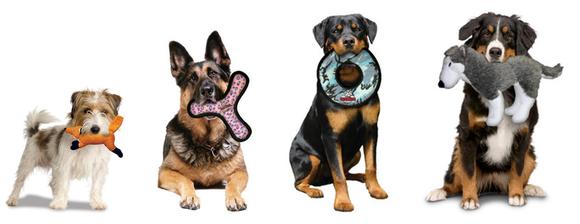
Neophilia in domestic dogs (Canis familiaris) and its implication for studies of dog cognition- Kaulfub & Mills, 2008
- Neophilia is a concept that means the organism has a preference for novelty, which is linked to temperament traits via neurophysiology. This concept has been seen in dogs with a good deal of evidence and is theorized to have been an adaptive consequence of domestication, for animals that are domesticated would be routinely subjected to novel material and behaviours. Thus neophilia may have been present in a sub population of ancestral wolves that facilitated an increased contact between dogs and humans, supported by the niche opened by human settlements (scrap food available, protection for humans)
- Aim: The aim of this study is to investigate whether the dogs really have a prefence for novel objects over familiar ones because as much as we understand that dogs may prefer novelty, there is a lack of empirical evidence. N= 17
- Methods: Dogs were exposed to 2 of 5 toys during a 10min play time with the experimenter and toys, then an hour period with the toys alone and then with another 10min play period once again with the experimenter and toys. I think there were only 2 familiarization trials with 3 tests afterwards. Testing was conducted by placing a novel object in line with the 2 familiar ones and commanding fetch to see which object the dog chooses.
- Results: Dogs chose the novel object significantly more than expected by chance (38/50 trials were novel item)
- Discussion: It seems there is a clear indication that dogs have a predisposed preference for novelty when in the absence of other cues to indicate the salience of the object. This could influence other studies conducted on dogs with evidence for highly cognitive abilities that are human like. For example a study with one dog had shown that the individual could learn the name of a new object even if they had no prior exposure to the object or the name, and this is through exclusion learning. Exclusion learning is found in children where if you show them 7 objects and name each one, and then include an 8th novel object that they do not know. They assume that the new name is linked with the new object, through a process of elimination of already known knowledge. This is coined as Novel Name- Nameless Principle, and is a process that rapidly speeds up the process of learning a new language. However a dog showed similar signs of this, but the fact is that the dog may have been just choosing the novel object out of its predisposed preference for novelty, when given an order it does not understand rather than comprehending that the new name was linked with the new object.
 Al3xandria