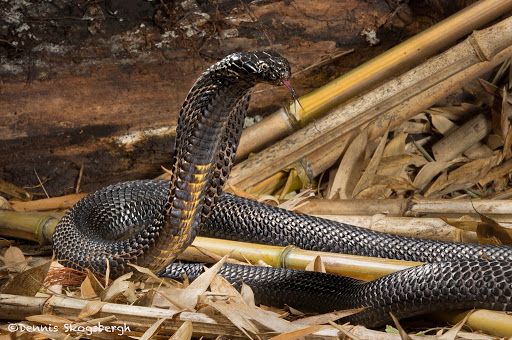
Venom analysis of long-term captive Pakistan cobra (Naja naja) populations – Modahl et al. 2009
- Captive bred snakes could have the potential to produce better quality venom and higher yields because of better hygienic conditions, hydration, as well as consistent food supply (however the fact that there is not much stochastic randomness that causes their body to go into cycles could also be detrimental? Kind of like becoming stagnant, your body no longer needs to function at peak capacity because minimal effort still is rewarded with hydration, better hygiene and consistent food supply?)
- Snakes in the wild that routinely use their venom, shown to have less venom than ones kept in captivity (Panizzutti et al. 2001).
- Variability of venom can have an impact both on primary venom research and management of snakebites. Genetic diversity could result in lower quality venom from colony kept snakes since there is a low population in captivity
- Aim: observe 15 cobras housed at two different facilities and analuzed the venom variation patterns within long term captive naja colonies.
- Method: both venom facilities had snakes that were related to each other in some form, siblings or parents. They were all sampled within a three month span July- Sept, only a single venom sample was taken from each cobra.
- Result: they state that variation is something that cant be controlled for because finding two groups of matched venomous snakes is hard, however could this be circumvented by using a within-subject approach, thus the snake is only being compared to itself at an earlier time point, we lose the possibility of comparing age as closely but we can control for other more pronounced differences.
- Three finger toxins are non enzymatic proteins that are abundantly found in venom of elapids. Cobra venom is mostly made up of postsynaptic neurotoxins or alpha neurotoxins which block nerve transmission causing a flaccid paralysis and death by respiratory failure.
- Found there to be a significant variations in concentrations of various protein toxins
 Al3xandria