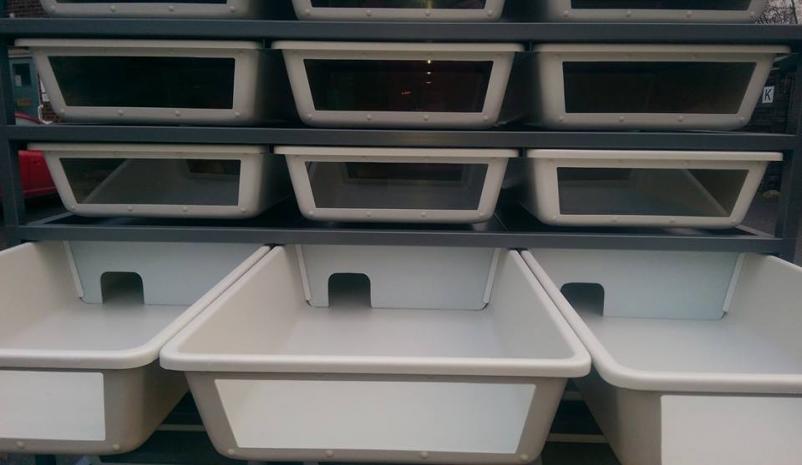
Animal- appropriate housing of ball pythons (Python regius) – behaviour-based evaluation of two types of housing systems – Hollandt et al. 2021
- Abstract: Was looking at the effects of enrichment on snake welfare by testing ball pythons (n=35) in rack systems for an 8 week duration then flipping them to an enriched environment consisting substrate, a hide, climbing enrichment, water basin (swimming), elevated basking spot, and living plants. Abnormal behaviours were almost exclusively seen in racks versus vivariums and there was a significant difference in normal behaviour between the treatments.
- Introduction: ball pythons frequently inhabit savannahs with temps ranging from 16-43°C, and tend to hide in rodent burrows and abandoned termite mounds during the daytime. Typically considered ground dwelling but sometimes seen in low heights and they like to use water for bathing when shedding. In terms of rack systems they were first designed in North America around 1992, they normally consist of newspaper, bowl of water, and a hide. Rack systems are useful because they are quick to clean, efficient for keeping multiple snakes, and relatively low risk for the snakes in the sense of things they can injure themselves on as well as escape. Problems with rack systems however are that there is no height dimension restricting climbing, there is a lack of space which means less room for hiding places or enrichment, there is also less of a thermal gradient so thermoregulation is usually not possible, also no light means diurnal species lose out on encouragement while crepuscular and nocturnal snakes are constantly in active mode. Vivariums provide a lot more room for customization that can fit the specific needs of the snake, for example live plants, substrate for digging, large water dish as well as multiple hides that help in shedding and thermoregulation respectively. Furthermore enrichment can be easily added to vivariums given the abundance of space. But vivs do also have downsides such as possibilities of mold growth and hazardous bacteria if not cleaned properly.
Stereotyped behaviours are coping mechanisms for subjects that cannot fully engage in a natural behaviour because of the artificial environment around them doesn’t allow it. These are seen as stress markers for welfare. - Methods: Ball pythons (n=35) were kept in racks for 8 weeks and then flipped into vivs for 8 weeks, behavioural observations were conducted via cameras for a 24hr period for 5 days. A detailed ethogram was created using various behaviours such as defensive and comfort.
- Results: 8 behaviours were statistically significant in terms of difference between treatments, for example like crawling forward.
- Discussion: on top of the clear signs that they were capable of engaging in more natural behaviours in a viv, they found that the snakes only showed excessive amounts of interest in the camera when kept in the racks. It seems that snakes may be willing to accept any form of stimulation when kept in barren environments which might be why they are easier to feed in rack systems as well. Also rack system snakes exhibited stereotypical behaviours about 12% of all behaviours while viv snakes exhibited 0.04%.
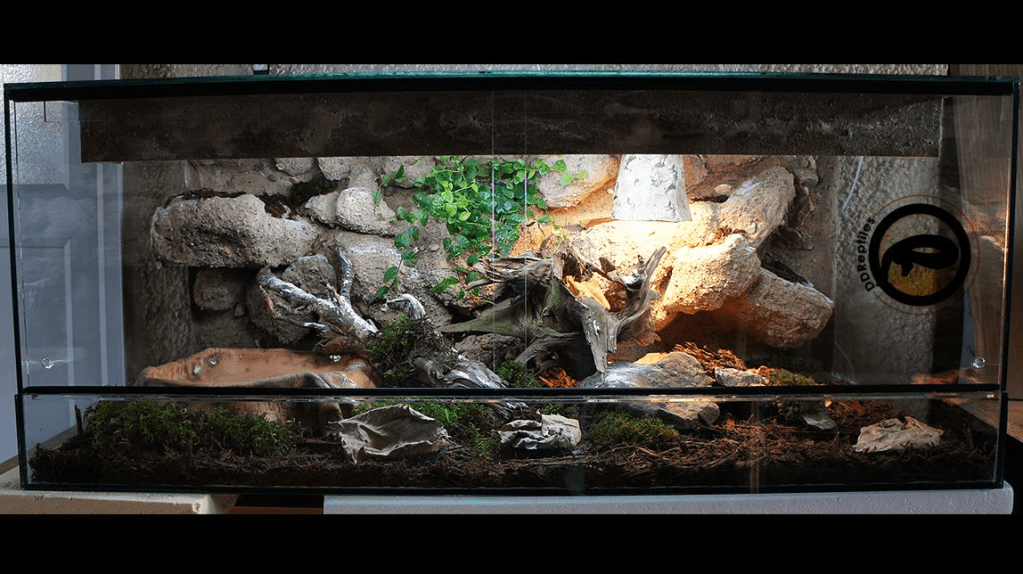
- Alrighty, so it seems that naturalistic environments are beneficial for snakes because they drastically reduce abnormal behaviours while encouraging locomotion and exploration. This may be because the vivs are full of stimuli that constantly keep the snakes engaged compared to the rack system, this active stimulation means they habituate quicker to novel stimuli. When running cognitive tests this will provide them with a certain advantage since they have a decreased fear response to novelty thus these snakes may be quicker to approach test stimuli as well as participate in tasks. However, I wonder if rack system snakes may be better for training since they are deprived of stimulation so consistently, which means when you do take them out for training they are so stimulated that they pay attention better to the task? Or maybe they become so fascinated with ordinary things once outside of the rack that they are unable to maintain the focus needed to be trained quicker? Everything comes down to habituation so I think snakes in the vivs would do better even with the training tasks in general but if we were to mimic a training exercising using food rewards in a rack type environment (minimal stimulation and small space) maybe they would be better at honing in on the training exercise with no distractions? Example of a vivarium below
 Al3xandria