Comparison between two methods of scorpion venom milking in Morocco – Oukkache et al. 2013
- Abstract: Compared the difference between manual extraction of venom and collection through electrical stimulation. Found that electrical stimulation had a lack of hemolymph contaminants like hemocyanin while manual showed evidence of it. Hemocyanin is secreted when under stress or faced with trauma.
- Background: In Morroco the yellow scorpion and black scorpion are responsible for a majority of stings. The potent venom is sought after for research purposes because they contain valuable proteins and peptides, which are extracted via manual extraction, electrical stimulation, and maceration (I think it means to take the gland out?). One study found that electrical stimulation produced more toxic venom compared to maceration, maybe the muscles need to be activated or intention faked for toxicity to increase? Maybe this means using electrical stimulation for the western hognoses wouldn’t be a bad idea but it does mean we would need to get some form of anaesthesia which complicates things. The type of extraction is important for producing useable venom and this study observed protein content, biochemical characteristics, and lethality.
- Methods: Androctonus mauretanicus (Amm) and Buthus occitanus tunetanus (Bot) scorpion venoms were used. The venoms were pooled from many specimens, then lypholized and stocked at -20°C. Check text for specifics because they reference papers for their methods.
Protein concentration: determined by absorbance measurements at 280nm using a 5mg/mL concentration.
Gel electrophoresis of venoms: preformed on 15% polyacrylamide gel in the presence of SDS under reducing conditions. check text for specifics
Spectral analysis: absorbance spectra of venoms were taken by using a Beckman spectrophotometer (220 – 600nm).
Determination of median lethal dose (LD50): found lethal potency according to WHO, groups of 5 mice were used per venom dose.
Immunization of horses and antivenom production: plasma proteins were fractionated by precipitation with ammonium sulfate and immunoglobulins enzymatically digested to produce F(ab’)2. The fractions containing the F(ab’)2 fragments were extensively dialyzed against saline solution. F(ab’)2 is a type of polyvalent antivenom I think? some other study compared this with whole IgG antivenom for effectiveness. They were both basically the same.
Western Blot Analysis: check for specifics - Results:
Venom Colours: electrical stimulated venom in both species delayed the discolouration to blue, while manual turned blue quickly.
Venom biochemical characteristics: found that manually stimulated venom had mostly hemocyanin with very little toxic components while electrically stimulated venom had only proteins corresponding to toxins.
Spectral analysis: reconfirms that the venom protein content is extremely high in electrically stimulated compared to manual.
Lethal dose (LD50): the lethal dose required for each venom needed to be 3x higher for manual stimulated versus electrical stimulation. - Discussion:
The low toxic components found in the manually stimulated venom are the components found n prevenom which is a transparent venom that contains a combination of salt and several peptides that modulate ionic channels and elicits significant pain and toxicity because of a massive local depolarization. In conclusion electrically stimulated is a far better method than manual extraction. - This is a really interesting study because it shows that the way we milk venom has a direct impact to the quality that we get. The process used in snake milking facilities is extremely stressful, thus whats to say that using a method with voluntary extraction wouldn’t be better? Also snakes are kept in barren tubs so whats to enrichment won’t also alter the composition of venom?
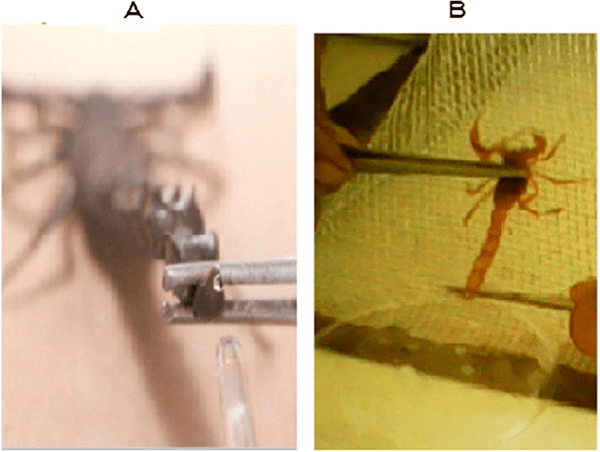
- A is Manual extraction and B is Electrical stimulation
 Al3xandria