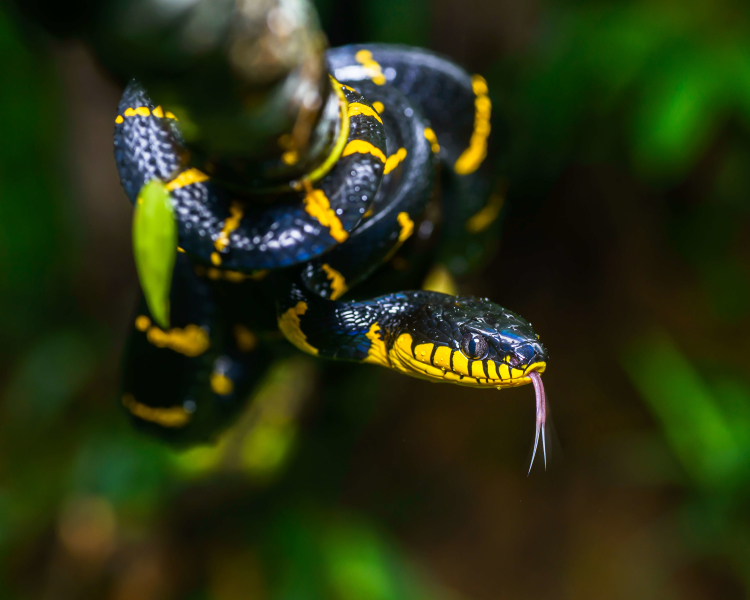
Rear-fanged snake venoms: an untapped source of novel compounds and potential drug leads – Saviola et al. 2014
- Abstract: Venoms are very useful, in snake venoms specifically the most useful components are disintegrins and proteases from viper venoms and are used for anti-cancer and hemostatic dysfunction activities. This study looks at rear fanged colubrid snake venom since they have been rarely analyzed. They used current omic technologies that make up for the low venom yield. -> this might be helpful for our western hognose study.
- Introduction: A main problem with these types of snakes resides in their low pressure venom delivery system which makes it difficult to extract the venom. But there are new methods that may be able to circumvent this issue.
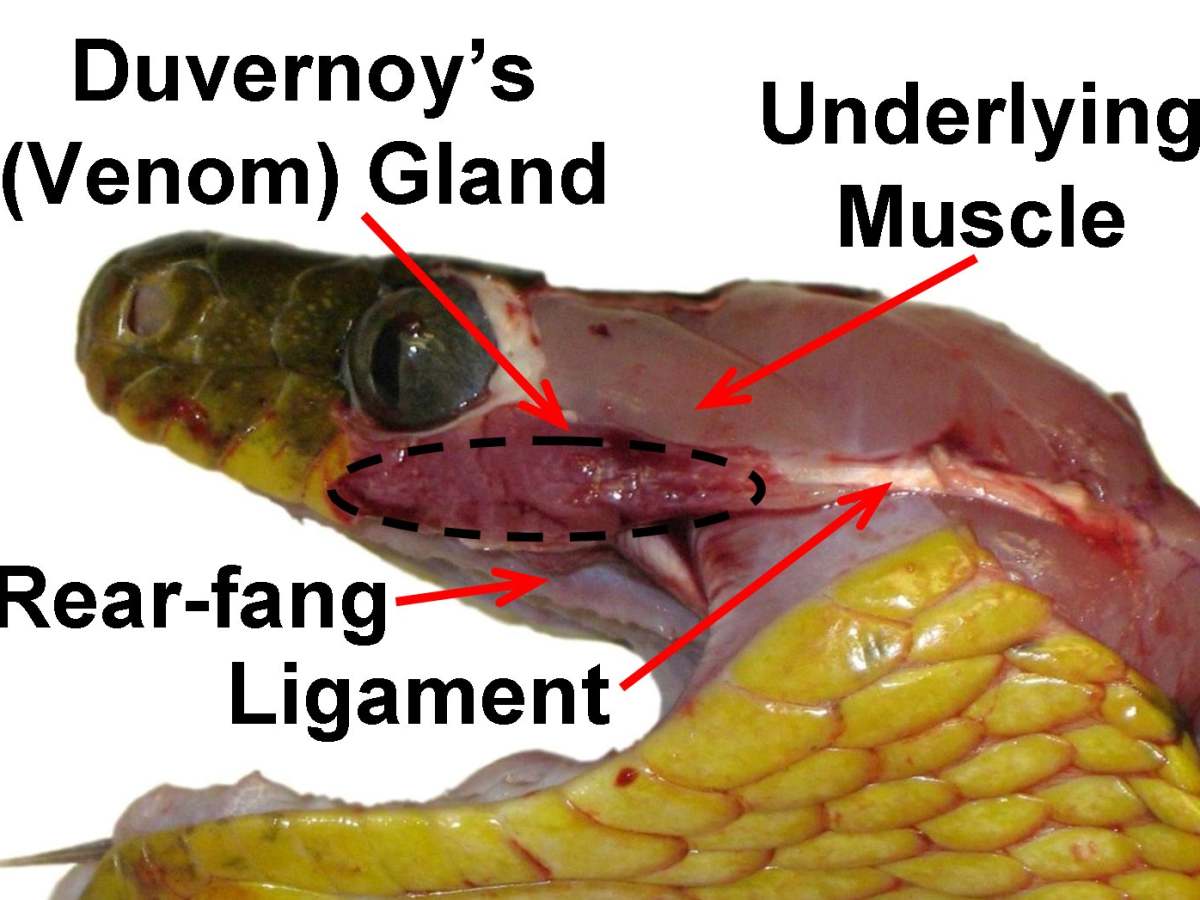
- The Duvernoy’s venom gland: 1/3 of the 2300+ species of non-front fanged advanced snakes make their own venom. The Duvernoys gland is similar to the venom glands of front fanged snakes. Most rear-fanged snakes also lack hollow fangs, instead have posterior maxillary teeth that participate in venom introduction into the tissues. Rear fanged snakes actually produced different amounts of venom based on the snake, Boiga irregularis produce decent yields of 18.5mg while smaller snakes like Alsophis portoricensis produce relatively smaller amounts like 5.9mg of dried venom weight. They routinely used ketamine anesthetia closely followed by an injection of pilocarpine which significantly increased venom yields. Other common anesthetics are Zoletile (100mg), Tiletamine (50mg), Zolazepam (50mg) at a dose of 3mg/kg but check the paper for specifics. This makes it possible to resample the same snake multiple times. *Diversity of venom in rear-fanged snakes are generally less complex compared to front fanged*. -> this is interesting, given their differences in complexity we may see differences in how the venom responds to enrichment as well. But this may strengthen the case for our experiment because rear-fanged snakes produce less complex venom that may display an obvious change to the treatment since there are less components to observe, lol or may be absent of change. Rear fanged snakes have atleast 8 different protein families in their venoms and most of which contain metalloproteases ( PIII) and cysteine-rich secretory proteins (CRiSPs) as the dominant components, while front fanged snakes have more complex components like 3 finger toxins (this can be found in some rear fanged as well).
- Toxins to drugs, colubrid venoms in drug discovery: Since snake venom genes have orthologs (genes that may have evolved from a common ancestor) among vertebrates rather than evolving de novo, pushed for use in drugs. First successful venom based drug was captopril which is a medication for high blood pressure. 2 more drugs known as Tirofiban (anti-platelet drug) and integrilin (treats coronary ischemic disease) were both designed based on the blueprint of 2 viper venom disintegrins (echistatin and barbourin respectively).
- Drugs targeting coagulopathies: Anticoagulants in snake venoms include enzymatic proteins like metalloproteinases, serine proteinases and phospholipase A2 enzymes. A specific example of a serine proteinases are thrombin like enzymes (TLEs) that display similar functions to thrombin. TLE’s often target the plasma glycoprotein fibrinogen that is normally split specifically by thrombin, which releases fibrinopeptides A and B which leads to fibrin polymerization and stabilization by factor XIIIa and creates insoluble clots. But a sequelae (means a condition that occurs from an existing condition) of envenomation is the opposite which is the loss of critical clotting factors causing hemorrhages. Most rear-fanged snakes have low amounts of serine proteinase, thus dont exhibit much of these properties. But they are abundant in metalloproteinases which also serve a therapeutic purpose (check paper for specifics). However the therapeutic benefits seems to lie more with the components found in front fanged venoms since they are either absent or found at low concentrations in rear fanged.
- Cysteine-rich secretory proteins (CRiSPs) and other toxins: Cyclic nucleotide-gated (CNG) channels are involved in sending signals from the sensory epithelium and olfactory neurons, basically information retrieval from the senses, and in venom there are CNG blockers called CRiSPs which are widely distributed among front and rear fanged snakes. CRiSPs are 20-30kDA highly conserved monomeric proteins, and all work on the principle of inhibition, however they can affect a wide range of body parts. For example some CRiSPs in front fanged can inhibit CNG channels, high conductance Ca activated K channels, and one specific species P. patagoniensis showed unique necrotic activity toward murine gastrocnemius muscle at specific amounts. Other critical components are C-type natriuretic peptides (CNP) which act as biological messengers and provide the ability to control blood vessel tone. A CNP precursor was found in relatively high abundance within a rear fanged snake thus we may find more if we were to investigate.
- Paralytic toxins: Three finger toxins (3FT) are 60-79 amino acid non-enzymatic proteins that are normally found in elapids but have been recently found in rear fanged. Their slight differences in non structural residues allow them to bind with a high degree of specificity. They also show a wide array of pharmacological activities using a conserved structure which makes them important models for structure-function studies and aid with novel drug design. Neurotoxic effects of venom have been documented using the Boiga family of colubrid snakes, which showed temporary inhibition of twitches in muscles of chicks. *** Denmotoxin is a 3FT from Boiga dendrophilia (rear fanged) that can recognize peripheral nicotinic acetylcholine receptors from atleast 2 different prey types which was shown when its effectiveness was 100x less in mice than in birds. *** <- just kinda cool. More examples, check paper.
- Phospholipase A2 (PLA2): they induce varying pharmacological effects that disrupt normal physiological processes, and rear fanged snakes have shown that they do possess PLA2 capabilities.
- Cytotoxic effects of rear fanged: Generally colubrid snake venoms lack cytotoxic components but further investigation may provide insights into components that can slow cell proliferation and impede pathways for critical metastasis (when a group of cells breaks away from the original proliferation site, horrible for cancer), without showing the effects of cytotoxicity to the cell line.
- Anti-parasitic effects: Shows signs of potent cytotoxic effects on parasites in the Leishmania genus.
 Al3xandria