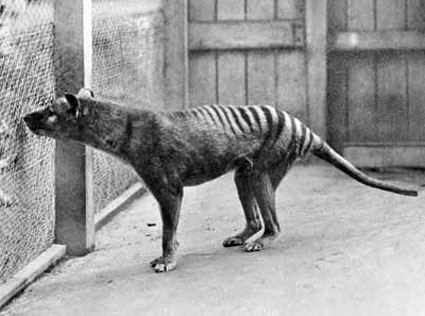
Sources of stress in captivity – Morgan & Tromborg, 2006
- Abstract: Animals housed in artificial habitats are confronted by a wide range of potentially provocative environmental challenges. In this article, we review many of the potential stressors that may adversely affect animals living in captivity. These include abiotic, environmental sources of stress such as artificial lighting, exposure to loud or aversive sound, arousing odors, and uncomfortable temperatures or substrates. In addition, confinement-specific stressors such as restricted movement, reduced retreat space, forced proximity to humans, reduced feeding opportunities, maintenance in abnormal social groups, and other restrictions of behavioral opportunity are considered. Research in support of the claims for these environmental elements as stressors for captive animals reveals no unique suite of behavioral or physiological responses that will clearly indicate the cause of those responses; rather, it is up to us as managers and caretakers of animals in captivity to evaluate enclosures and husbandry practices to ensure the optimal well-being of animals in our care. -> taken word for word
- Introduction: The term stress has multiple definitions, thus for the sake of the paper they define it as “the experience of having intrinsic or extrinsic demands that exceed an individual’s resources for responding to those demands”, or as something that challenges homeostasis. This can include a wide range of stimuli such as sudden changes to temperature, or a direct stare from a dominant individual.
1. Acute short term stressors -> usually associated with increased vigilance, physiological components include tachycardia, increased respiration, increased glucose metabolism, increase in isomers of glucocorticoids (GCC)etc. Basically shifts metabolism toward energy mobilization and away from energy conservation.
2. Chronic Stressors -> causes prolonged elevation of GCC levels which can damage areas of the brain responsible for ending the stress response. Physiologically indicated by suppressed reproductive cycling, a dull activation of HPA axis in response to acute stress, suppressed immune system, reduced growth hormone levels, reduced body weight (wonder if this would mean lower mass of organs or a reduced size of organs such as venom glands in a snake that is exposed to chronic stress in the form of forced venom collection) and inhibited growth rate. Behaviourally this could mean reduced reproduction, increased abnormal behaviour, reduced exploratory behaviour, increased behavioural inhibition, increased vigilance, reduced behavioural complexity, increased aggression, increased fear, increased freezing behaviour and decreased latency to initiate this action.
One of the main stressors of captive animals is their inability to engage in species-specific behaviours that appear to have a “behavioural need”.
Abiotic Environmental Stressors: The presence or absence of critical sensory stimuli
Overview: In hopes of enriching captive organisms researchers have investigated the effects of modifying structure, complexity and interactivity of subject environments. Some elements of this could be increasing abiotic factors such as increasing natural sounds and improving substrate complexity. “The dearth of information on a species umwelt is to blame”-> love the verbiage, this basically means that the little amount of information we have on the perspective of an animal and its perception of the world is where the problems with captivity and enrichment arise.
- Sound:
Thing to consider is that most surfaces in labs and animal housing facilities are acoustically reflective which may heighten noise levels, for example in a zoological park the average noise level was 70dB, in labs it ranged from 80-110 dB. In natural environments, in descending order of noise it goes rainforest(40dB max)> riverine habitats (37dB) > savannah (36dB). Many lab animals exhibit symptoms of stress when lvls approach 85dB for extended periods of time. Examples of loud noises in these captive environments are the clanking of metal when cleaning, trucks and vehicles in the area as well as firework displays near zoo parks. These loud noises occurring chronically over a long period of time in a stochastic fashion can be negative to subjects with elevated levels of arousal both behaviourally and physiologically. This in turn can affect offspring, with effects such as immunosuppression, exaggerated distress responses to aversive events, changes in auditory threshold, increased disturbance behaviours, impaired learning, abnormal social behaviour and suppressed exploratory behaviour -> once again snakes that are kept in venom facilities have been bred in these chronically stressful conditions which may affect venom composition and output. The stress of noise can be seen with lab rabbits that alter their circadian rhythms to avoid noise stressors, this is important b/c rabbits are skittish creatures that can injure themselves when startled especially in small enclosures. The stressed noises and vocalizations of conspecifics can also cause stress among subjects as seen with young chimps that exhibit brachycardia and and increased attention when exposed to said stimuli. Other side of this is using sounds for enrichment like music or natural sounds at acceptable volumes.
Stress from anthropogenic sources that emit high frequency noises that may not be audible to the human ear should be considered as well since animals like prairie dogs, some species of fish and hamsters can hear ultrasonic sounds.
- Light conditions:
Captive animals are sometimes kept in enclosures that are lit in schedules that best benefit the humans rather than the subjects, which may alter circadian rhythms. Fluorescent lights are also preferred by caretakers, but this gives off a certain wavelength which may not be optimal for the subjects or even detrimental. Having an altered night-day cycle can affect melatonin to serotonin ratios. In mice increased disruptions in light conditions can increase plasma corticosterone and decrease latencies for aggression. Having continuously dim lights or continuous high light is also detrimental for species, with high light increasing aggression and injuries amongst turkeys. The species in question is also important, as shown by Turkey poults that preferred dimmer lights than ducklings did, this is also seen with some strains of the same species as in rats. Even the height of cages affects development since this affects stressors like amount of light and gazes from workers. In mice that were housed in higher racks were seen as more emotional (indicator of stress) and greater likelihood of developing diabetes. Rhesus macques shoed more abnormal behaviour when exposed to artificial compared to natural full spectrum. Some birds rely on certain wavelengths to be present when viewing potential mates thus lighting may affect reproductivity. Another problem with fluorescence is that these lights actually constantly flicker but flicker at a high enough rate that it isn’t caught by the human eye. Human eye flicker rate is 45-60Hz before things begin to fuse and for different animals it could be higher. Dogs are like 80Hz, while chickens can be 105Hz.
 Al3xandria