
Sources of stress in captivity- Morgan & Tromborg, 2007
Confinement Specific Stressors Continued
- Absence of retreat space:
Having a lack of retreat space within an enclosure can cause stress for the subjects. This is seen with mice that display more wire gnawing when housed in a barren cage compared to an enriched enclosure that has cardboard tubes to hide in. This is also present in larger mammals like goats and sheep that would show an increased level of aggression towards humans if they didn’t have a place they could retreat to. The type of housing is also key, providing hides that are opaque are preferred over transparent by mice, and camouflaged hides are preferred by gorillas. When housing multiple species together which may increase aggression towards one another, it is better to include hides to reduce aggressive interactions. Also reducing the number of entries is also preferred, so usually 1 b/c subjects tend to defend hides and mice have displayed sleeping with their heads facing the entryway. -> All of this highlights the need for complexity in enclosures rather than just size alone.
- Forced Human Proximity upon Subjects:
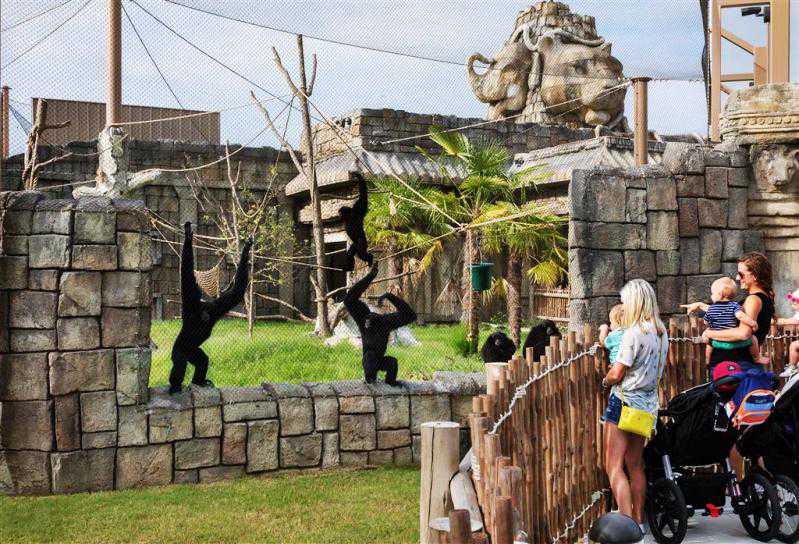
This section highlights the need to understand what is an animals adequate flight distance, this means the distance to which the animal feels comfortable from people without displaying deleterious behaviour. Zoos constantly build exhibits that do not take this into account, and usually employ a forced lockout where the subjects cannot return to the audience-free portions of their enclosures during business hours. The effect of visitors on zoo animals is pretty well documented, based on the quantity of visitors: this can increase aggression within inhabitants of the same enclosures, decrease foraging and grooming behaviour as well as increase pacing and even completely suppressing some key behaviours. This can be seen physiologically by the increase in urinary cortisol in relation to increasing visitor number in spider monkeys. Handling can also be negative to a subject even if it is seen as not harming the animal, for example shearing of sheep increases heart rate and plasma cortisol. Handling also affects the immune responses of laying hens -> this shows how handling in general even though it is not necessarily aggressive or bad, can still have deleterious effects. Now imagine snake venom milking facilities which collect venom using a deleterious method, multiple times over the animals entire life. The stress can easily be impacting the venom composition if we see that it affects physiological mechanisms. An example of something like this is when dairy cows showed a lower milk yield at farms that employed aggressive tactics to handle the animals. Also positive interactions with broiler chickens showed less fear of humans and less plasma corticosterone than non-handled birds. This goes even further when animals can readily discriminate between humans, for even close interactions with unfamiliar humans can cause stress.
- Routine Husbandry:
Rhesus macaques have been known to connect the presence of leather gauntlet gloves with intense handling procedures, thus one study used that as an aversive stimuli and found it to be stress inducing.
- Restricted Feeding and Foraging Opportunities:
Many animals display contrafreeloading which means they prefer to work for food even if that same food is available freely. This leads researchers to believe that foraging for a stimulus that satiates their appetite is a rewarding inherent experience. An example of this was seen with rats that were raised in impoverished enclosures had a strong preference to work for food while enriched rats did not. -> looks like the need to be cognitively stimulated is important for welfare to the point that animals will expend unnecessary energy to achieve it. Foraging opportunities could be implemented easily with tactics such as making the food harder to find within the enclosure, providing fruit in its entirety so that it increases feeding time rather than giving them as small pieces. When this is coupled with predictability, or even predictable meals alone can have negative impacts on subjects. Animals were known to increase pacing another stereotypical behaviour in anticipation of meal time, having a random schedule for feeding has shown to decrease aggression in chimps. Also another feeding issue is easy to eat diets which is negative especially for carnivores and hunters, providing opportunities for species-specific hunting was seen as beneficial for fishing cats, cheetahs and polar bears. Easy to eat diets also bad for the teeth of hunters and carnivores since the whole prey item provides certain benefits.
 Al3xandria