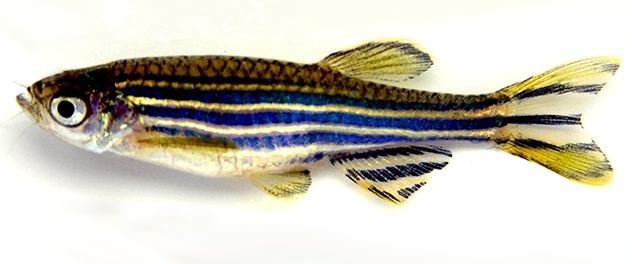
Behavioural plasticity across social contexts is regulated by the directionality of inter-individual differences – Guayasamin et al. 2016
Abstract:
Behavioural heterogeneity of a group can alter its responsiveness, decision-making and fitness. This study observed whether pairing fish of varying personalities altered individual behavioural responses. Results were that the relative personality of the fish had an impact but not the magnitude.
Introduction:
They found that when shy individuals are paired w/ a bolder fish, then the shy fish behaved more boldly as well. However how a shy fish behaves when paired w/ an even shyer fish therefore becoming the relatively bolder fish is still unclear. This study paired fish w/ more and less boldness than itself to understand these effects giving 2 trials/fish
Methods:
n = 96 subjects,
– Experimental apparatus: 60cm x 45cm, the design of the apparatus uses shelters and textured transparencies are on the interior of walls.
– Procedure: fish first completed 3 asocial trials, and these trials were spaced 48hrs apart, acclimation time was 2min after placement, exploratory scores were determined and pairs were decided. 24hrs after the last asocial trial each fish was paired with a fish both below and above its personality for 2 trials that are spaced 24hrs apart.
–Determining exploratory tendency: total distance traveled, median distance from closest enclosure wall, median distance from shelter, total time spent out of shelter, median duration of each visit to the shelter; these were parameters used to observe exploration. Check paper for more in depth notes.
– Pairing fish: Fish were paired with a more exploratory and less exploratory fish with a varied magnitude of difference in personalities between the pairings. The 3 most and least exploratory fish, the ones at the end of the spectrum completed both trials with the opposite since they were the maximums.
-Measuring plasticity: comparing scores from asocial trials compared to social trials and they observed fishes in pairs as if they were alone.

Results:
– Asocial exploration is a poor predictor of social behaviour, but accounts for correlated plasticity across social treatments
– Individual plasticity is largely determined by relative social condition, and leads to behavioural convergence between partners
– Asocial exploratory tendencies do not predict the coordination of movement between individiuals during pair trials
– Asocial exploratory tendency predicts the magnitude and direction of behavioural change
Discussion:
Found that less exploratory fish became more exploratory when paired with bolder fish, to the point that sometimes they were boldest of the two. A reason for this based on previous research is the conformity hypothesis. This basically says that less exploratory individuals are more socially aware and responsive to their environment while more exploratory individuals tend to pay less attention to conspecifics. Therefore the less exploratory individual adapts or conforms to the bolder conspecific and matches its exploratory behaviour. However this study shows that this can’t be the complete explanation b/c the fish were paired with fish from a gradient. Thus if we were to see matching with pairs through conformity then you would see a gradient of increase in the less exploratory fish rather than just large increase in exploration. Some limitations with the study was that it uses a “no barrier” aspect which helps to eliminate some confounding variables but is not as comparable to other studies.
 Al3xandria