Stress in wild and captive snakes: quantification, effects and the importance of management – Waeyenberge et al. 2018
Introduction:
Stress responses can be seen in all vertebrates and snakes are not the exception. Stressors are known to cause the subject to have a lack of control over the situation by adding a component of uncertainty. When snakes are faced with a stressor they have a stress response that includes releasing catecholamines such as adrenaline and noradrenaline into the blood but there is also an endocrine stress response that uses the Hypothalamic-pituitary-adrenal axis (HPA) to release glucocorticoids like corticosterone into the blood. Snakes release corticosterone which is the same as cortisol in mammals and it can be seen as an adaptive hormone that manages energy availability to body systems through gluconeogenesis (This could mean that if a snake is kept in a stressful situation like a small cramped rack system and had multiple experiences with rough handling techniques for milking, then it could have a higher corticosterone level that impairs it’s ability to manage energy availability which could then impact venom quality or quantity?). This study states that chronically sustained stress responses can cause for non-adaptive levels of glucocorticoid secretion which does impair welfare of subjects with multiple studies as references. High levels of corticosterone can lead to immune suppression making the individual more prone to getting an infection of some sort. Also the individuals can perceive stress in unique ways, a stressor for one individual may be innocuous to another, this can be affected by sex, age, reproductive condition and former experiences. In the wild numerous factors can affect snake stress like food deprivation, habitat loss, and climate change. In captivity the snakes are normally stressed by management issues like temperature, humidity, enclosure size, crowding, and inability to engage in natural behaviours. Quantifying chronic stress in wild snakes is crucial if we are managing populations and habitats, and in captivity it is important to gauge welfare.
Stress in wild snakes
Urbanization has negatively impacted wild snakes by affecting biodiversity and the functioning of ecosystems. Studies on stress in wild snakes have rarely been conducted, but few have tried to shed light on the issue. One study found that food availability had a direct effect on snake population sizes with a positive correlation with increasing food availability. Also loss of habitat as a result of urbanization causes increased levels of plasma baseline glucocorticoids. As snakes rely on shrub like habitats for shelter, the lack of these natural habitats can cause chronic stress on inhabitants. The nearby proximity to people can also be stressful snakes as some snakes are forcefully removed from environments close to neighbourhoods. Temperature can affect snake stress as well, for example light wintering conditions that do not cause hibernation can cause stress. Plasma corticosterone levels were higher during hibernation, and if the temperature during hibernation is higher than usual than this can decrease the level of corticosterone found.
Stress in Captive snakes
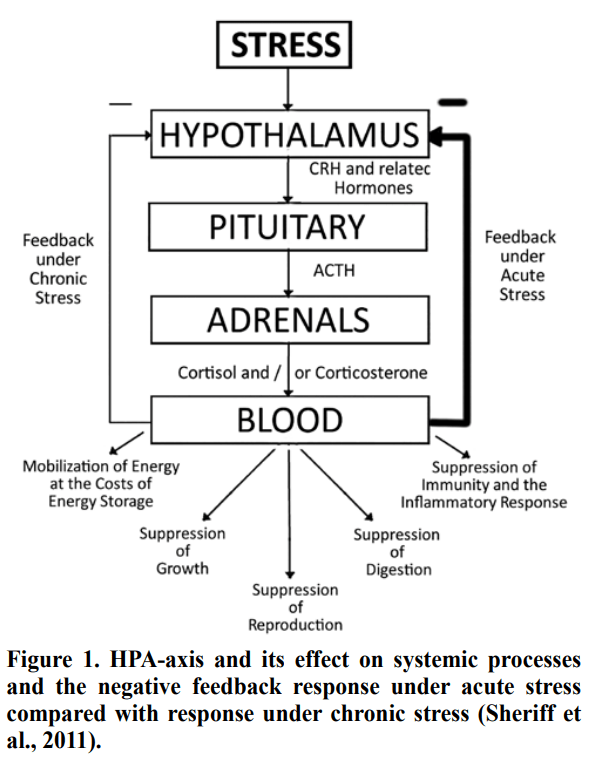
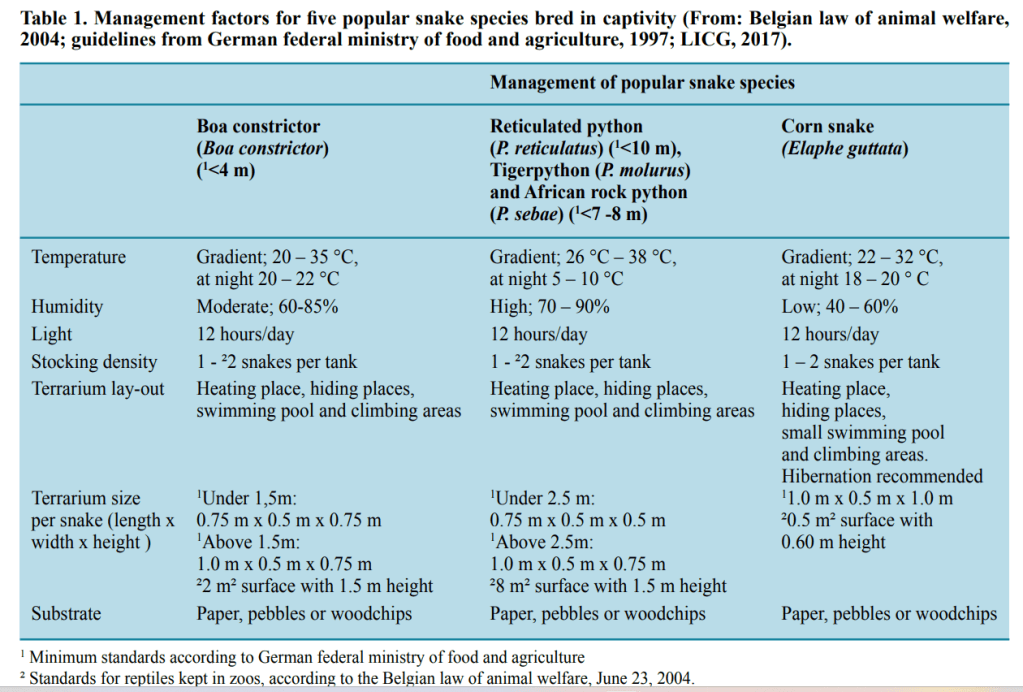
Inadequate management and husbandry conditions are the reasons for impaired welfare in captive snakes. In captivity the snakes are normally stressed by management issues like temperature, humidity, enclosure size, crowding, and inability to engage in natural behaviours. A study showed that snakes that were caught from the wild and kept in captivity showed higher levels of plasma corticosterone levels.
Assessment of chronic stress
Snake behaviour is heavily used to assess stress for example like engaging in abnormal behaviours like nose rubbing against transparent barriers. However snakes are cryptic prey species that sometimes may not show behavioural changes as a result of stress, a study injected snakes with corticosterone and found no behavioural changes even though stress levels were higher. Also stress responses may be individually unique, for example a calm individual might exhibit more active and erratic behaviour when stressed while a hyper individual may become lethargic from lack of movement. Cortisol and corticosterone are the accepted biomarkers for stress in vertebrates and they are pleitropic which means they have multiple functions. Corticosterone can be observed using radioimmunoassay, enzyme immunoassay in blood or skin, or by fecal glucocorticoid metabolite. Plasma corticosterone is used to measure acute stress and the sampling time can affect the levels observed, for example one study found that higher levels of cort was seen in recently captured snakes compared to 50min later. Using Fecal glucocorticoid metabolites are a good way to observe average stress over a set time period. It is also non-invasive thus minimizes the chances of the sampling process affecting cort levels. However when analyzing fecal matter, you must remember that diet can impact the cort levels observed. Using snake skin is also another way to assess cort levels and has shown to provide similar results to fecal analysis.
 Al3xandria