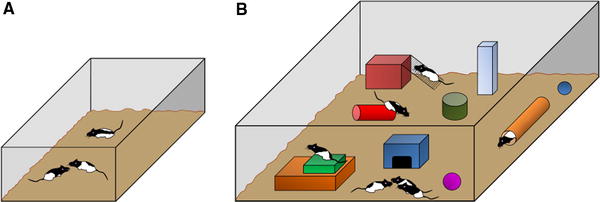
Environmental Enrichment of Laboratory Rodents: The Answer Depends on the Question – Toth et al. 2011 Abstract: Environmental enrichment may increase welfare of subjects but it does move away from standardization since enrichment can be perceived as numerous things. Does not help that the same type of environmental enrichment (EE) can have different effects onContinue reading “Literature Review on the Complexities of Environmental Enrichment”
Category Archives: cognition & neuroscience
Subject-Specific Enrichment > Anthropomorphic Enrichment
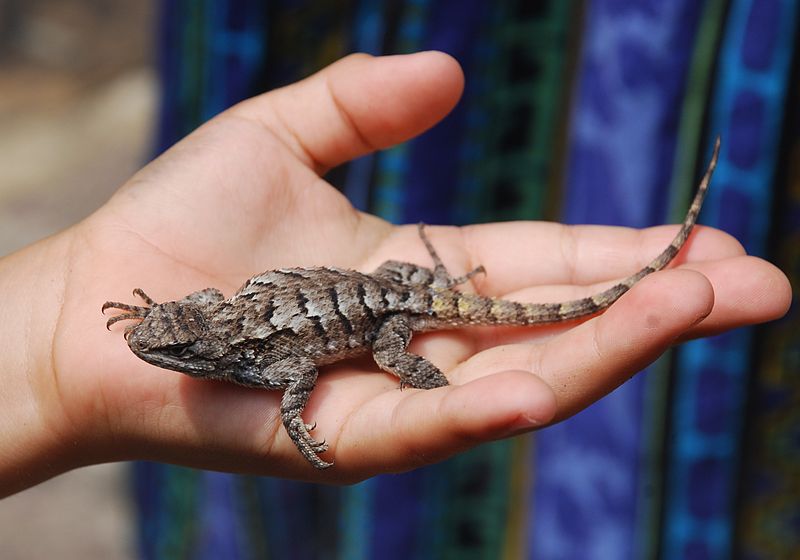
Does environmental enrichment really matter? A case study using the eastern fence lizard, Sceloporus undulatus- Rosier & Langkilde, 2011 Abstract: Little is known about reptilian environmental enrichment, thus was investigated by using Eastern Fence Lizards that spend most of their time in trees or high ledges. They implemented solely climbing enrichment and found there toContinue reading “Subject-Specific Enrichment > Anthropomorphic Enrichment”
Morris Water Maze-taking it back to basics
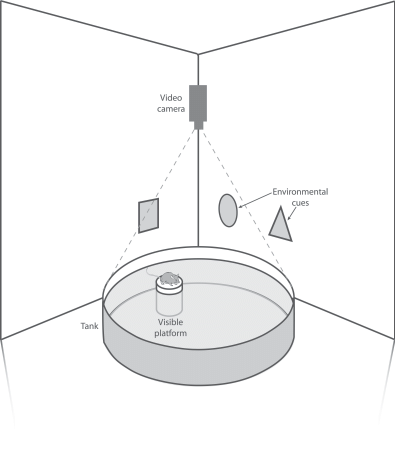
Developments of a water-maze procedure for studying spatial learning in the rat- Morris, 1984 Abstract: Outlines procedures for 1. automatically tracking the spatial location of a rat without using attached light-emitting diodes, 2. studying different aspects of spatial memory (ex. working memory), 3. studying non-spatial discrimination learning. Introduction: The essential feature of the Morris waterContinue reading “Morris Water Maze-taking it back to basics”
Low Nicotine-induced Conditioned Place Preference only in Teens
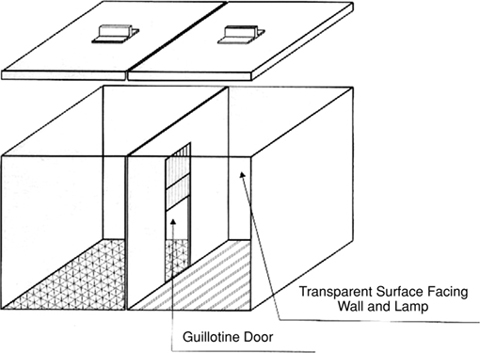
Nicotine-induced conditioned place preference in adolescent and adult rats- Vastola et al. 2002 Abstract: Checked the rewarding properties of nicotine on adult and adolescent rats, found that even a low dose created a conditioned place preference in adolescents while not in adults. This increased sensitivity to the effects of nicotine during adolescence may contribute toContinue reading “Low Nicotine-induced Conditioned Place Preference only in Teens”
Dogs Enjoy Music, especially college soft rock
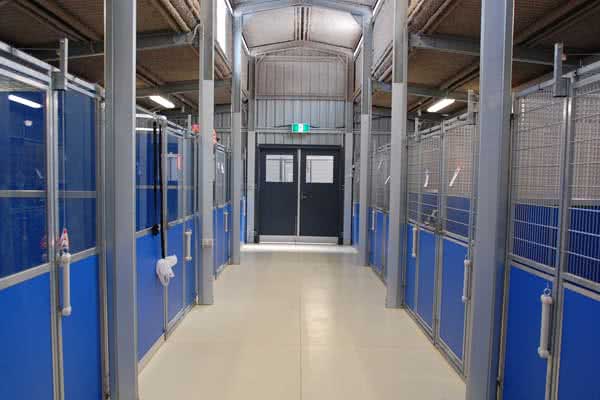
The effect of different genres of music on the stress levels of kenneled dogs- Bowman et al. 2017 Abstract: dogs were played 5 types of songs for 5 days of enrichment, found there to be no significant difference in barking, but significantly more barking after auditory enrichment has ended, and significantly more heart rate variabilityContinue reading “Dogs Enjoy Music, especially college soft rock”
Vivariums over Racks – Snake Welfare

Animal- appropriate housing of ball pythons (Python regius) – behaviour-based evaluation of two types of housing systems – Hollandt et al. 2021 Abstract: Was looking at the effects of enrichment on snake welfare by testing ball pythons (n=35) in rack systems for an 8 week duration then flipping them to an enriched environment consisting substrate,Continue reading “Vivariums over Racks – Snake Welfare”
Cognitive Testing Paradigms and Apparatuses for Mammals
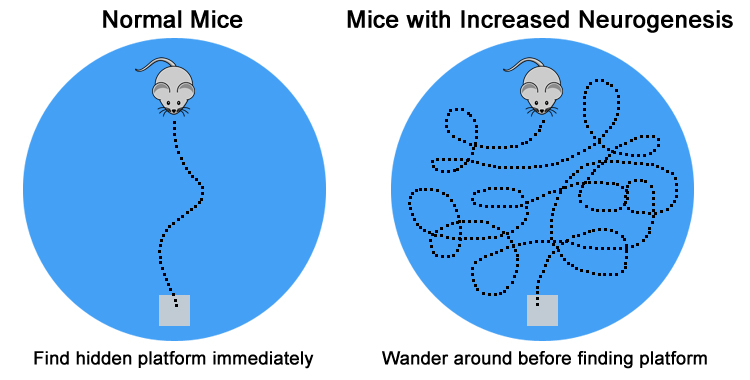
Behavioural Methods to Study Learning and Memory in Rats – Quillfeldt, 2006 Phenomenological observations are observations that are based on phenomenon the subject displays and are then used to make conclusions about intrinsic mechanisms. Also called an indirect form of observation. Taxonomy of Memory Types: can be classified into many types: Function: working vs referenceContinue reading “Cognitive Testing Paradigms and Apparatuses for Mammals”
Size does matter, in Brains
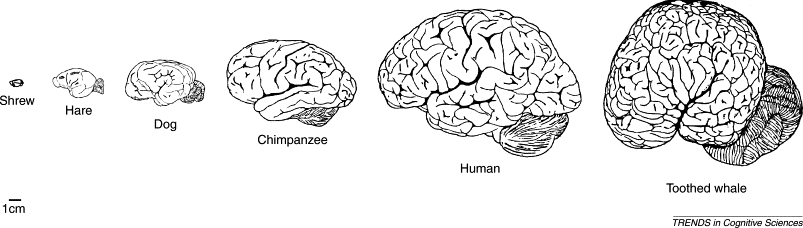
Brain size predicts problem-solving ability in mammalian carnivores (Comparative Cognition in zoo) – Benson-Amram et al. 2016 Abstract: There is speculation over whether a larger brain size does indicate better cognitive abilities, tested this by giving puzzle boxes baited with food and scaled the stimuli according to the different carnivores. Found that animals with largerContinue reading “Size does matter, in Brains”
Curiousity in Zoo Animals

Curiousity in Zoo Animals- Glickman & Srogues, 1964 Introduction: observed the responses by zoo animals when exposed to novel objects placed within the enclosure, and they used a diverse set of stimuli that varied in colour, shape, texture and odour. A cool little experiment by Brehm and Darwin (1874) where they placed a toy snakeContinue reading “Curiousity in Zoo Animals”
Free exploration on elevated plus maze reduces false entries?
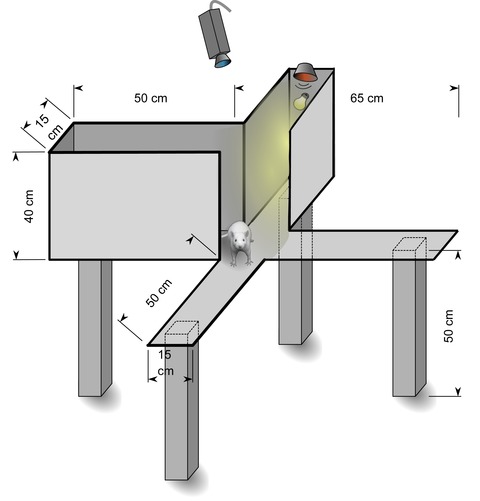
Free versus forced exposure to an elevated plus-maze: evidence for new behavioral interpretations during test and retest– Roy et al. 2009 Abstract: elevated plus mazes are built upon approach/avoidance behaviour when exposed to “safe” closed arms and “aversive” open arms, using this you can assess anxiety. Objectives: they wanted to compare standard forced exposure ofContinue reading “Free exploration on elevated plus maze reduces false entries?”
 Al3xandria