
Motor timing learned without motor training – Meegan et al. 2000 Brief Communications Paper Normally when perceptual training is involved in learning, there is no generalization to similar tasks. Which means that the training is only beneficial when implemented with that specific task. However this study has found evidence that training in one form ofContinue reading “Perfection without Practice”
Category Archives: Uncategorized
The Degrees of Contrafreeloading (Parrots)
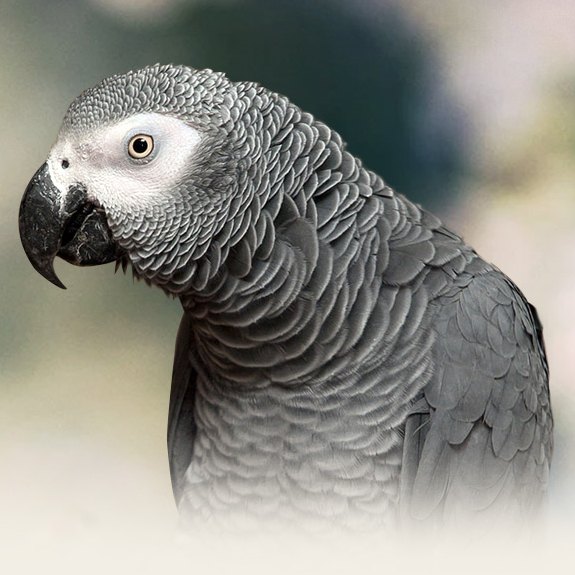
Initial evidence for eliciting contrafreeloading in grey parrots (Psittacus erithacus) via the opportunity for playful foraging – Smith et al., 2021 Abstract: Contrafreeloading is the choice to work for food rather than it be freely available. This study examines this aspect in parrots (n=4-5) and found that during the first experiment the subjects preferred contrafreeloading.Continue reading “The Degrees of Contrafreeloading (Parrots)”
Mob-Mentality
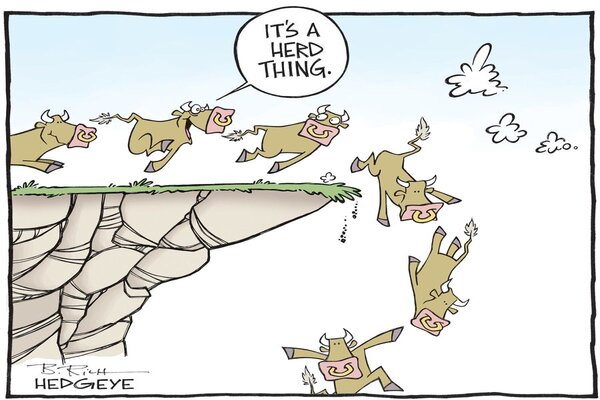
Collective rule-breaking – Krause et al. 2021 Abstract: This paper looks at how cognitive mechanisms involved with rule breaking at an individual level can be scaled upwards to understand how rule breaking then appears in social groups. Social Contagion (The spread of ideas, attitudes, or behaviour patterns in a group through imitation and conformity.) playsContinue reading “Mob-Mentality”
Differences in Venom Extraction (Kraits, vipers, cobras)
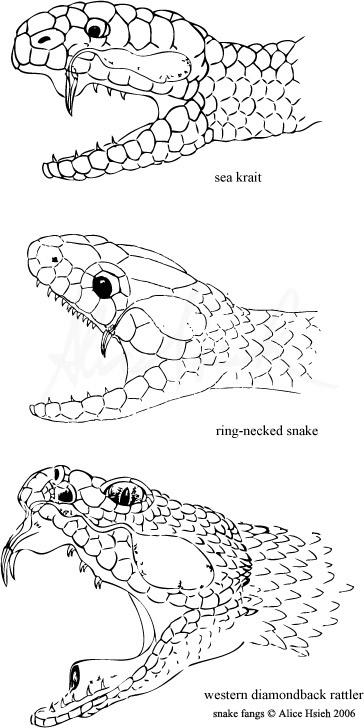
A study of snake venom yield by different methods of venom extraction – Tare, Sutar & Renapurkar, 1986 Abstract: Various methods of venom extraction including application of manual pressure to the glands, electric stimulation, and vacuum method were used for the extraction of venom from snakes maintained in captivity and in an open farm. TheContinue reading “Differences in Venom Extraction (Kraits, vipers, cobras)”
Processes underlying venom variation

Causes and Consequences of Snake Venom Variation – Casewell et al. 2020 Abstract: 1.8 million annual snake bite victims. This review describes how venom varies and its effects on snake bite victims. Snake venom and Snakebite: – Venom causes 138,000 deaths worldwide and an additional 500,000 additional cases of venom induced morbidity. It is listedContinue reading “Processes underlying venom variation”
Venom Glands heal like Wolverine

Physiological demands and signaling associated with snake venom production and storage illustrated by transcriptional analyses of venom glands – Perry et al 2020 Abstract:The physiology and regulation of the venom gland still needs clarification thus a time series gene expression analysis was conducted on rattlesnake venom glands in comparison to other non-venom tissues. Found thatContinue reading “Venom Glands heal like Wolverine”
Latent Inhibition

Latent Inhibition – Lubow, 1973 Introduction: Latent inhibition is defined as the decrement in learning performance which stems from the nonreinforced pre-exposure of a stimulus prior to conditioning with said stimulus, which slows the learning curve. Scope of Latent Inhibition Phenomenon: Distribution across species: this has been demonstrated in goldfish, goats, sheep, rabbits, dogs andContinue reading “Latent Inhibition”
Snakes and Novel Scent Recognition
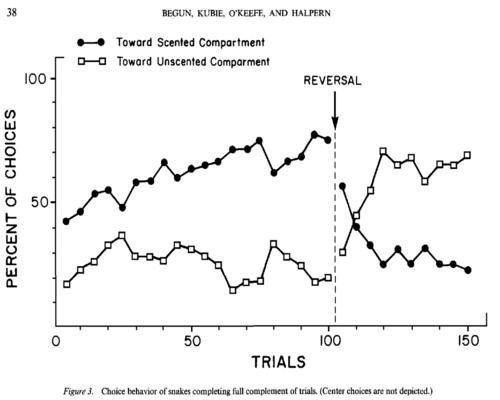
Conditioned Discrimination of Airborne Odorants by Garter Snakes – Begun et al. (1988) Abstract- Garter snakes were trained via food rewards to discriminate between two biologically irrelevant scents. The first experiment was a 2 sided compartment and the second was a 2 sided maze, in both the snakes showed the ability to discriminate correctly. 4Continue reading “Snakes and Novel Scent Recognition”
Literature Review on Stress in Captivity Pt. 3

Sources of stress in captivity- Morgan & Tromborg, 2007 Confinement Specific Stressors Continued Absence of retreat space: Having a lack of retreat space within an enclosure can cause stress for the subjects. This is seen with mice that display more wire gnawing when housed in a barren cage compared to an enriched enclosure that hasContinue reading “Literature Review on Stress in Captivity Pt. 3”
Literature Review on Stress in Captivity Pt.2
Sources of stress in captivity – Morgan & Tromborg, 2007 Abiotic environmental stressors: the presence or absence of critical sensory stimuli Odors: Most mammals are considered macroosmatic (means they depend largely on olfactory cues), and animals that live in captivity may be deprived of necessary enriching odors or be exposed to detrimental ones. For exampleContinue reading “Literature Review on Stress in Captivity Pt.2”
 Al3xandria