
THE EFFECT OF VARIED ENRICHMENT TYPES ON SNAKE BEHAVIOR – Krishnan et al., 2022 Abstract: 18 species of snakes from 2 families of colubridae and pythonidae were exposed to 4 types of enrichment consisting of humid hide, olfactory, climbing and suspended hide. Baseline observations and observations for 2hrs post introduction were conducted, there was noContinue reading “How not to do a snake enrichment study -_-“
Category Archives: cognition & neuroscience
Human Cognition and Culture – Witchcraft and Slavery (first 14pgs)

Witchcraft, Poison, Law, and Atlantic Slavery – Paton, 2012 The use of these kinds of things was widespread with slaves in Dominica using grave dirt in bottles, and Georgia slaves using conjure bags
Human Cognition and Culture – Voodoo & Christianity

The Vodun Way of Death: Cultural Symbiosis of Roman Catholicism and Vodun in Haiti – 1979 Africanism in Haitian Vodun The Dessounin Ritual of Death:The Degeneration and Regeneration of Being Conclusion: Vodun death rituals have pieces of Christianity as seen with the presence of Christian prayers and religious artifacts used in the rituals. The symbiosisContinue reading “Human Cognition and Culture – Voodoo & Christianity”
Eggs can talk?

Only child syndrome in snakes: eggs incubated alone produce asocial individuals – Aubret et al. 2016 Abstract: Egg clustering behaviour has many advantages like anti-predatory, moisture maintenance, temp control, prevention of eggs rolling and hatching synchrony through embryo communication. In this experiment water snakes were housed either in clutches or individually to see if theContinue reading “Eggs can talk?”
Rat snakes benefit from enrichment
Environmental Enrichment Alters the Behavioral Profile of Ratsnakes (Elaphe) – Almli and Burghardt, 2006 Abstract: 16 sub adult rat snakes (Elaphe obsoleta), 8 in enriched conditions and 8 in standard for 8 months. Enrichment came in the form of additions to enclosures with elevated hide, and loose substrate to burrow in as well as liveContinue reading “Rat snakes benefit from enrichment”
Fit for the Crib? Mice Prefer Certain Nesting Material
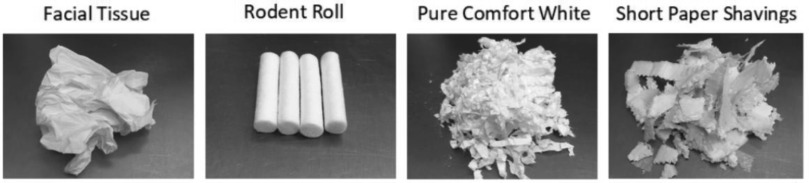
Preferences for nesting material as environmental enrichment for laboratory mice – Van de Weerd et al. 1996 Abstract: Behavioural and psychological needs of laboratory animals generally cannot adequately be met in standard laboratory cages. Environmental enrichment, which provides a more structured environment can enhance the well-being of laboratory animals. They may perform more of theirContinue reading “Fit for the Crib? Mice Prefer Certain Nesting Material”
Friendship over Feeding – Young Snakes Need Friends
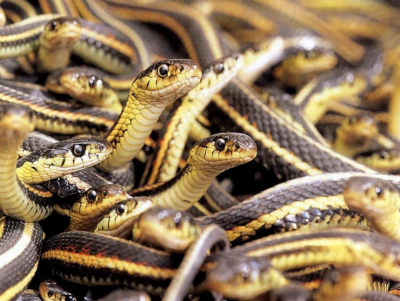
Aggregation and social interaction in garter snakes (Thamnophis sirtalis sirtalis) – Morgan & Miller, 2020 Introduction:Reptiles in general tend to rely on a method or variety of interactions called cryptic sociality, in which they use chemical cues to interact with conspecifics. However this is very hard to study given its invisible in most situations. TheContinue reading “Friendship over Feeding – Young Snakes Need Friends”
Drivers Ed for Fish

From fish out of water to new insights on navigation mechanisms in animals – Givon et al. 2022 Abstract: To understand navigation systems and whether its universal, they trained fish to navigate a terrestrial environment. They call this method a domain transfer methodology and placed a fish in a tank that was set upon aContinue reading “Drivers Ed for Fish”
Licking Large Lizards Prefer Scent Enrichment
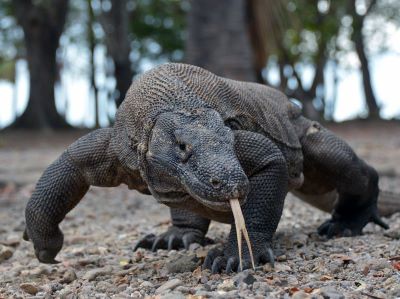
Evaluating Environmental Enrichment Methods in Three Zoo-Housed Varanidae Lizard Species – Waterman et al. 2021 Abstract: Little is known about reptile enrichment therefore this study observed the effects of including only scent-based enrichment and food enrichment (hanging feeders). Both types of enrichment significantly increased exploration and prolonged for 330 min post provision. There were noContinue reading “Licking Large Lizards Prefer Scent Enrichment”
Robots Infiltrate ArcherFish
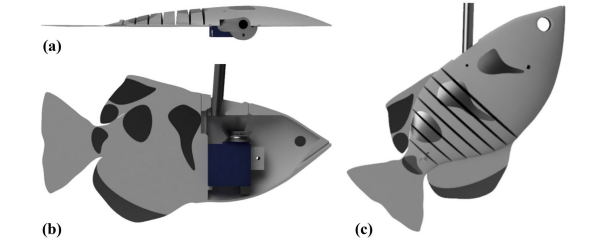
Archerfish respond to a hunting robot conspecific- Brown et al. 2021 Abstract: While the unique hunting behavior of archerfish has received considerable scientific attention, the specific social cues that govern behaviors like intraspecific kleptoparasitism in the species are less understood. This paper asks whether the use of a robotic facsimile representing an archerfish can elicitContinue reading “Robots Infiltrate ArcherFish”
 Al3xandria