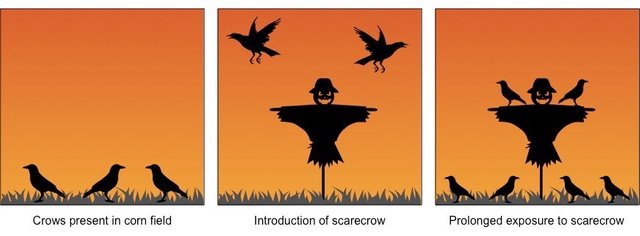
Habituation Revisited: An Updated and Revised Description of the Behavioural Characteristics of Habituation- Rankin et al., 2009 Introduction: Thompson & Spencer (1966) and Groves & Thompson (1970) first wrote an in-depth analysis on the definition of habituation. These two papers became classics and were revisited with some changes made to the content but mostly justContinue reading “Revised Habituation Characteristics”
Category Archives: cognition & neuroscience
Flexible Predatory Tactics by Snakes
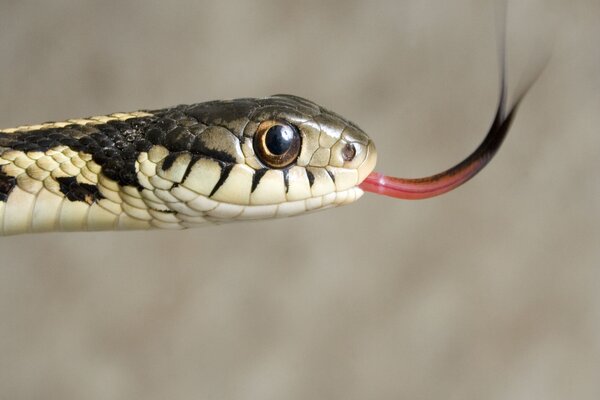
Effects of Chemical and Visual stimuli upon chemosensory searching by garter snakes and rattlesnakes – Chiszar et al. 1981 Introduction: There are 2 types of predatory strategies practiced by natricine snakes and crotalid snakes. The first case is that chemical cues increase tongue flick rate and the other is that visual and thermal cues releaseContinue reading “Flexible Predatory Tactics by Snakes”
Snakes know their Siblings
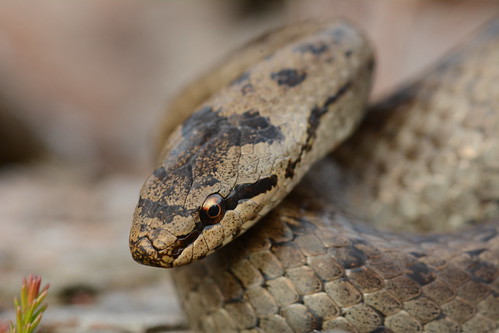
Chemoreception and kin discrimination by neonate smooth snakes, Coronella austriaca – Pernetta et al. 2008 Abstract: This study wanted to fill the gaps left in snake prey selection via chemoreception and wanted to investigate whether kin discrimination was present in a cannibalism practicing species. Pre-shedding the snakes showed less prey selection and post shedding showedContinue reading “Snakes know their Siblings”
Snakes and Novel Scent Recognition
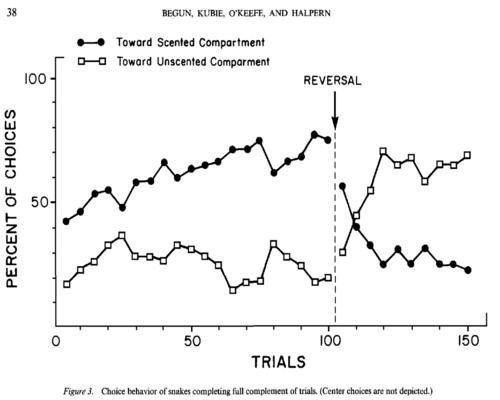
Conditioned Discrimination of Airborne Odorants by Garter Snakes – Begun et al. (1988) Abstract- Garter snakes were trained via food rewards to discriminate between two biologically irrelevant scents. The first experiment was a 2 sided compartment and the second was a 2 sided maze, in both the snakes showed the ability to discriminate correctly. 4Continue reading “Snakes and Novel Scent Recognition”
Literature Review on Stress in Captivity Pt.4
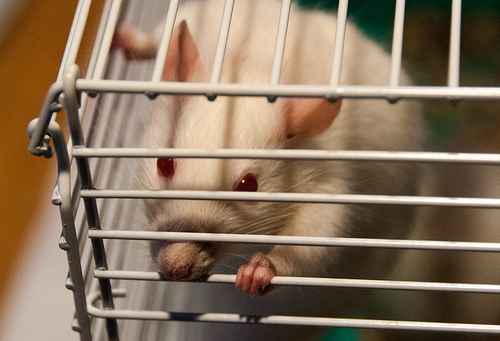
Sources of stress in captivity- Morgan & Tromborg, 2007 Abnormal Social Groups Most animals that are housed in lab settings are normally kept in individual enclosures even if the animals require social contact to engage in normal behaviour. Social isolation has been known to cause stress to subjects and is a well-known stress inducer forContinue reading “Literature Review on Stress in Captivity Pt.4”
Literature Review on Stress in Captivity Pt. 3

Sources of stress in captivity- Morgan & Tromborg, 2007 Confinement Specific Stressors Continued Absence of retreat space: Having a lack of retreat space within an enclosure can cause stress for the subjects. This is seen with mice that display more wire gnawing when housed in a barren cage compared to an enriched enclosure that hasContinue reading “Literature Review on Stress in Captivity Pt. 3”
Literature Review on Stress in Captivity Pt.2
Sources of stress in captivity – Morgan & Tromborg, 2007 Abiotic environmental stressors: the presence or absence of critical sensory stimuli Odors: Most mammals are considered macroosmatic (means they depend largely on olfactory cues), and animals that live in captivity may be deprived of necessary enriching odors or be exposed to detrimental ones. For exampleContinue reading “Literature Review on Stress in Captivity Pt.2”
Literature Review on Stress in Captivity Pt.1
Sources of stress in captivity – Morgan & Tromborg, 2006 Abstract: Animals housed in artificial habitats are confronted by a wide range of potentially provocative environmental challenges. In this article, we review many of the potential stressors that may adversely affect animals living in captivity. These include abiotic, environmental sources of stress such as artificialContinue reading “Literature Review on Stress in Captivity Pt.1”
Stress Affects Lactation in Rats
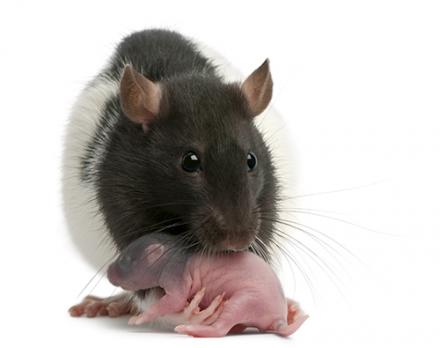
Animal models for the study of the effect of prolonged stress on lactation in rats – Lau & Simpson, 2004 Abstract: Stress has been well documented to suppress lactation, but this study aims to identify the effects of prolonged stress. One model controlled the contact with pups and the other introduced a male intruder, bothContinue reading “Stress Affects Lactation in Rats”
Stress Streamlines Physiological Processes (lizard)
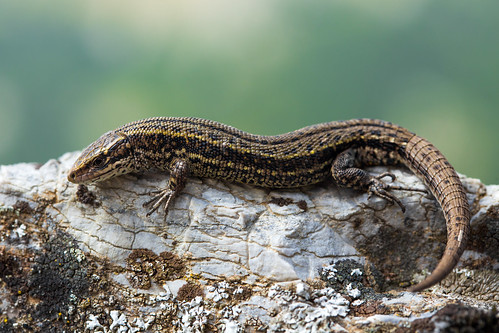
Chronic stress, energy transduction, and free-radical production in a reptile – Voituron et al. 2017 Abstract: corticosterone plays a crucial role in adapting to stressful environments. 3 main processes of respiration, ATP production and free radical production in the mitochondria may also affect stress responses, so this study tried to dissect these sub-cellular mechanisms. TheContinue reading “Stress Streamlines Physiological Processes (lizard)”
 Al3xandria