
A generative adversarial network model alternative to animal studies for clinical pathology assessment | Nature Communications – Xi Chen, Ruth Roberts, Zhichao Liu & Weida Tong , 2023 The source of the data: From chemicals to numbers: Generator vs. Discriminator – competing AIs The final formula for AnimalGAN became Generator architecture, the components Building the “virtual rat” brain FilteringContinue reading “Method behind AnimalGAN”
Tag Archives: animal-behaviour
Bats have personalities
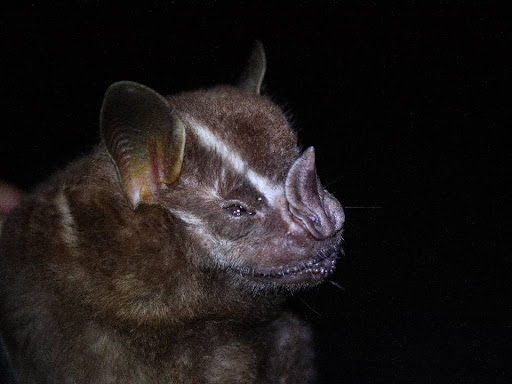
Personality and behavioural syndromes in two species of fruit bats (Chiroptera: Phyllostomidae) – Miguel et al., 2024 Introduction Methods Results Discussion
Commentary – Social Living/Isolation Affects Mite Personality
Personality expression is shaped by the early experienced social context in predatory mites- A commentary on the Schausberger and Nguyen, 2024 paper by Chiara, 2025 As this paper is a commentary on a previous paper, there are no subheadings thus this post will mainly be bullet points
Early Social Isolation Detrimentally Affects Zebrafish
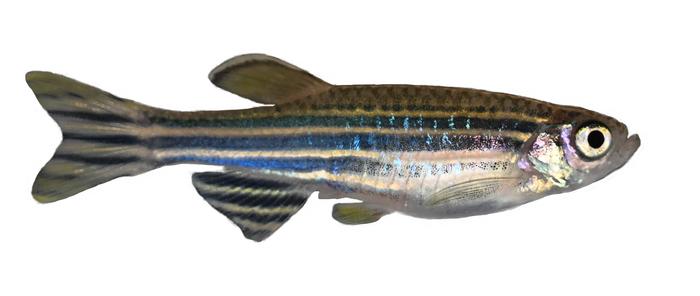
Developmental Social Isolation affects adult behavior, social interaction, and dopamine metabolite levels in zebrafish – Shams et al. 2017 Introduction Methods Results Discussion
Social Living/Isolation Affects Mite Personality
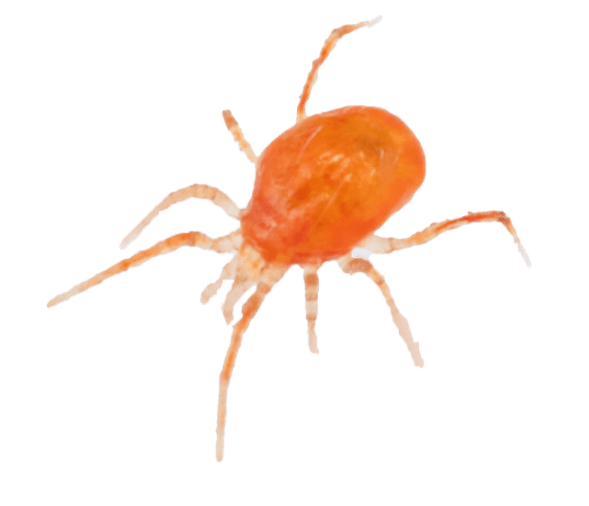
Early social isolation disrupts adult personality expression in group-living mites – Schausberger and Nguyen, 2024 Introduction Methods Results Discussion
Animal personality and social niches
Animal personality due to social niche specialization – Bergmueller & Taborsky, 2010 Definitions The evolution of animal personality The intra-specific ecological niche The social environment: a key factor for personality evolution Social conflict generating consistent individual differences Social conflict generating behavioural correlations Adaptive individual differences caused by developmental plasticity Social experience affecting the development ofContinue reading “Animal personality and social niches”
Hognoses Play Dead-Burghardt, Greene 1988
Predator simulation and duration of death feigning in neonate hognose snakes – Burghardt and Greene, 1988 Hognose snakes have a tendency to display a wide range of defensive behaviours that include puffing, hissing, coiling, striking, flattening, and playing dead. Playing dead includes flipping over and sticking their tongue out while releasing a noxious odour toContinue reading “Hognoses Play Dead-Burghardt, Greene 1988”
 Al3xandria